Cannabis Cultivation & Production
Cannabis Cultivation Accounting Services in Oregon
Accounting support for Oregon cannabis cultivators and producers — connecting production activity, inventory, cost accounting, bookkeeping, financial reporting and tax workpapers into one reliable financial record.
- Production activity
- Bookkeeping
- Cost accounting
- Financial inventory
- COGS
- Reporting
Overview
Cannabis Cultivation Accounting Services in Oregon
Production businesses build their own inventory. That single fact reshapes the accounting, because cost accumulates long before revenue arrives.
What is cannabis cultivation accounting?
Cannabis cultivation accounting is the financial process of recording and reconciling the revenue, production costs, inventory, payroll, equipment, liabilities and other financial activity of a cultivation business so that management reports and tax workpapers are supported by reliable accounting records.
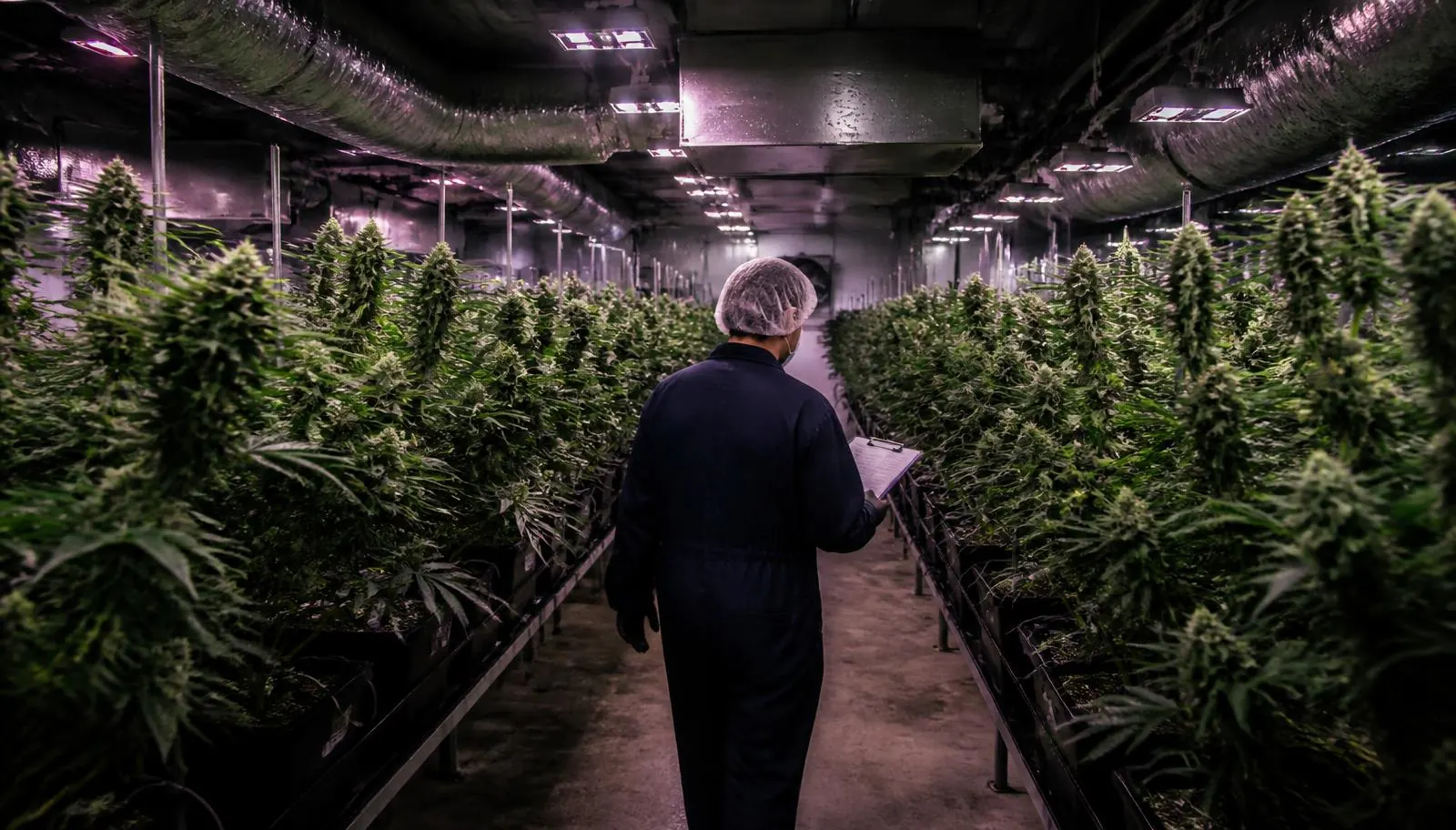
A retailer buys finished product and sells it. A cultivator spends months converting labor, utilities, facility capacity, materials and equipment into something salable. The money moves early; the revenue arrives late; and in between, the value sits on the balance sheet as inventory. Accounting for that middle stretch is the whole discipline.
The operational side of a production business already generates enormous amounts of data — plant records, weights, package movements, transfer records. None of it is accounting. It describes what physically happened, not what it cost, what it is worth in the ledger, or what the business earned. Cultivation accounting is the translation layer between the two, and the quality of that translation determines whether cost of goods sold, gross profit and every downstream report mean anything.
Everything commercially useful sits above that layer: financial reporting, tax planning, tax preparation and fractional CFO analysis. Where the production accounting is weak, all of it becomes guesswork presented in a spreadsheet.
- Production activity
- Bookkeeping
- Cost accounting
- Financial inventory
- COGS
- Gross profit
- Financial reporting
- Tax / CFO / management use
Context
Why Cannabis Cultivation Accounting Is Different
Not because accounting principles change, but because the cost structure, the inventory life cycle and the source systems are unlike a resale business.
Why is cultivation accounting different?
A cultivation business creates inventory over time instead of purchasing it finished. Labor, facility costs, utilities, materials and equipment are consumed across production cycles, the operational record lives outside the general ledger, and accounting has to convert supported cost data into financial inventory value and cost of goods sold.
Consider what is in motion in a single month at a producing facility. Payroll runs against several distinct activities. Utility invoices arrive for space that serves production and non-production purposes alike. Vendor bills cover materials and inputs that will be consumed over weeks. Equipment is purchased, repaired or replaced. Multiple production cycles overlap, each at a different stage. Product moves between rooms and sometimes between facilities. And at the end of it, someone has to say what the inventory on hand is worth.
A cash-basis bookkeeper looking only at the bank feed will code all of that as period expense, report a loss during build-up months and an implausible margin in harvest months, and leave inventory on the balance sheet at whatever number was last typed there. The statements will reconcile to nothing. This is the single most common condition we find in cultivation books.
- Production activity across overlapping cycles
- Inventory that passes through stages
- Labor as a major recurring cost
- Facility costs and utilities
- Equipment and facility improvements
- Inputs and materials consumed over time
- Seed-to-sale operational systems
- Physical inventory records
- Financial inventory value
- Multi-facility operations
- Cost of goods sold
- Cash requirements ahead of revenue
Foundation
Cannabis Cultivation Bookkeeping
Nothing above this layer can be better than the layer itself. Cost accounting, inventory value and reporting all inherit the quality of the recurring bookkeeping.
Recurring cannabis bookkeeping for a cultivation business is more than transaction coding. It is the discipline of capturing every financial event and then proving the record against something outside itself each period.
- Bank reconciliation
- Cash reconciliation
- Vendor bills and receiving
- Accounts payable
- Payroll recording
- Fixed-asset additions and disposals
- Inventory entries
- Production-related transactions
- Debt and loan activity
- Tax liability accounts
- Equity activity
- Month-end close
The sequence matters. Transactions are recorded, reconciled against bank, payroll, vendor and inventory evidence, and only then closed. A close performed on unreconciled data produces statements that look finished and are not. When cleanup engagements run long, it is almost always because months were closed before they were reconciled.
- Daily transactions
- Bookkeeping
- Reconciliation
- Month-end close
Structure
Cultivation Chart of Accounts
Enough detail to distinguish meaningful financial activity — and no more than the business will actually maintain.
A cultivation business usually needs more account structure than a small resale operation, because the cost side is where the interesting questions live. If payroll lands in one account, utilities in another and everything else in a general "cultivation expenses" bucket, no analysis is possible: cost accounting has nothing to work from, facility comparisons are impossible, and year-end workpapers have to be rebuilt from source documents.
At the same time, an over-engineered chart of accounts fails in a different way. If nobody can code transactions consistently, the detail becomes noise. The right structure is the one that produces the distinctions management and the tax workpapers actually need, at a level the team can maintain every month.
- Sales and revenue
- Inventory accounts
- Production-related costs
- Cost of goods sold
- Payroll and employer payroll costs
- Facility costs
- Utilities
- Equipment and repairs
- Professional services
- Debt and interest
- Tax liabilities
- Fixed assets and accumulated depreciation
Categories above are illustrative. There is no universal cannabis cultivation chart of accounts; the appropriate structure depends on entity structure, license types, facilities and reporting needs.
Core discipline
Cannabis Cultivation Inventory Accounting
Inventory is where a cultivation balance sheet and a cultivation income statement meet. It is also where most production books break.
How does cultivation inventory accounting work?
Cultivation inventory accounting tracks financial value through beginning inventory, production activity, inputs and materials, work in process where applicable, finished inventory, transfers and adjustments, to a supported ending inventory value that determines cost of goods sold.
The stages a financial record has to account for are straightforward to list and demanding to maintain: what the business started the period holding, what production activity added, what materials and inputs were consumed, what remained partially complete where the business tracks work in process, what became finished inventory, what moved between locations, what was adjusted, and what remained at period end.
The most consequential distinction on this page is between quantity and value. An operational system can tell you a facility holds a certain weight of finished product. It cannot tell you what that product cost to produce, and therefore what it should be carried at. Two facilities with identical quantities can carry materially different financial inventory values because they spent differently to get there. Confusing the two is how businesses end up with cost of goods sold that swings wildly for no operational reason.
Where inventory value is estimated rather than supported, the error does not stay contained. It moves straight into cost of goods sold, then into gross profit, then into every margin figure, then into the tax workpapers. For the deeper financial inventory, cost flow and valuation work, see inventory accounting.
Beginning inventory
+Applicable inventory / production cost activity
−Ending inventory
=Cost of goods sold
- Inventory quantity≠Financial inventory value
- Metrc record≠General ledger
Mapping
Production Stages & Financial Inventory
Operational stages and financial inventory categories are related, but they are not the same taxonomy and they rarely map one-for-one.
A production team thinks in terms of the stage a batch is in. Accounting thinks in terms of where cost sits and whether it is supported. Those two views inform each other, but an operational stage label does not by itself establish an accounting treatment.
What accounting needs from each stage is cost information: what was spent, on what, over what period, and with what documentation behind it. That information then feeds financial inventory categories the business can actually support and explain, and those categories are what appear in the general ledger.
- Operational stage
- Cost information
- Financial inventory
- General ledger
Cost accounting
Cannabis Cultivation Cost Accounting
Cost accounting is the bridge between what the business spent and what its inventory is worth.
How are cannabis production costs accounted for?
Production costs are captured through payroll, vendor bills, facility and utility invoices and equipment records, coded with enough detail to identify production-related activity, and then carried into financial inventory using documented cost accounting rather than estimates.
The categories that matter in a cultivation business are labor, materials and inputs, facility-related costs, utilities, equipment-related costs and, where the business supports it, production overhead. Each has to arrive in the ledger with enough coding detail to be identifiable later, because a cost that cannot be traced back to its source cannot support an inventory value.
From there, cost information flows into inventory: into work in process where the business tracks it, into finished goods as production completes, and eventually into cost of goods sold as inventory is sold. The discipline is unglamorous — consistent coding, documented allocation approaches, retained support — and it is what separates a supported inventory value from a plug figure.
We approach this as documented cost accounting with fact-specific analysis. Costs are recorded where they belong based on evidence, not moved around to produce a preferred result.
- Production activity + supported cost data
- Cost accounting
- Financial inventory
- COGS
COGS
Cultivation COGS Accounting
Cost of goods sold is not entered. It is produced by the inventory records — which is exactly why the records matter.
Beginning inventory
+Applicable inventory / production cost activity
−Ending inventory
=COGS
Net sales
−COGS
=Gross profit
How does cultivation accounting affect COGS?
Cost of goods sold is derived from beginning inventory, period inventory and production cost activity, and ending inventory. Every one of those inputs comes from the accounting records, so supported COGS depends on reliable bookkeeping, documented cost accounting and a supported ending inventory value.
When a cultivator tells us their cost of goods sold moves unpredictably month to month, the cause is nearly always upstream: inventory was not valued consistently, production costs were coded differently in different periods, or a physical count adjustment landed in one month for activity that occurred across several.
Our language here is deliberate. We work toward supported COGS built on documented cost accounting and fact-specific analysis. We do not approach cost of goods sold as something to be inflated, and we do not relocate costs to produce a preferred tax result. Supported figures survive scrutiny; constructed ones create exposure.
Labor
Labor Accounting for Cannabis Cultivators
Labor is usually the largest controllable cost in a production business, and the one most often recorded in a way that makes analysis impossible.
Payroll accounting starts with getting the mechanics right: gross wages, employer payroll costs and payroll liabilities recorded accurately and reconciled to the payroll provider each period. See cannabis payroll for the recurring payroll function itself.
Beyond the mechanics, department or activity coding is what makes labor reporting useful. When wages are recorded against the activity performed, the business can see what production actually costs in labor terms, compare periods, and give cost accounting supported data rather than an allocation percentage someone chose years ago.
What we avoid is prescribing a universal treatment. Whether particular labor costs are capitalized into inventory or expensed depends on the facts of the business, the records available and the analysis performed with your tax advisors. Consistency and documentation are the parts we can insist on.
- Payroll run
- Recording + coding
- Labor reporting
- Cost analysis
Facilities
Facility Costs
Production facilities generate a steady stream of costs that need consistent financial tracking before anyone can reason about them.
Rent or lease costs, utilities, repairs, maintenance, insurance, security-related costs where applicable and facility improvements all belong in the record with enough detail to identify what they relate to. In a multi-facility business, that also means knowing which site each cost belongs to.
Utilities deserve particular attention in cultivation, both because of magnitude and because a single meter may serve space used for more than one purpose. Where a business allocates such costs, the allocation approach should be documented, applied consistently and supported by something better than intuition.
- Rent and lease costs
- Utilities
- Repairs
- Maintenance
- Insurance
- Security-related costs where applicable
- Facility improvements
- Site-level cost identification
Fixed assets
Equipment & Fixed Assets
Capital spending is heavy in cultivation, and the fixed-asset schedule is one of the most commonly incomplete records we encounter.
Cultivation equipment, environmental and HVAC equipment where applicable, lighting equipment where applicable, vehicles, facility improvements and technology are typically recorded as fixed assets at historical cost, with a placed-in-service date and accumulated depreciation tracked over time.
Is buying equipment with cash an expense?
Not automatically. Paying cash for equipment is a cash outflow; whether and how it becomes an expense depends on how the asset is recorded and depreciated, which is a fact-specific determination made with your accountant and tax preparer.
An incomplete fixed-asset schedule causes trouble in several directions at once: the balance sheet is wrong, depreciation is wrong, the tax workpapers have to be rebuilt, and any lender or investor review turns into an archaeology project. Keeping the schedule current is far cheaper than reconstructing it.
- Purchase
- Fixed asset at historical cost
- Placed in service
- Depreciation over time
- Cash purchase≠Current-period expense
Systems
Metrc & Cultivation Accounting
These are two different records of two different things, and treating one as a substitute for the other is a recurring source of trouble.
Does Metrc replace cultivation accounting?
No. Metrc is an operational seed-to-sale record of regulated inventory movement. It is not a general ledger and not accounting software, and the quantities it holds are not financial inventory values. Accounting uses those records as supporting evidence.
Metrc is authoritative about operational inventory movement. The general ledger is authoritative about financial position and results. Reconciliation between them is how a cultivation business gains confidence that what it believes it holds physically is reflected in what it reports financially.
For the operational reconciliation work itself, see Metrc reconciliation, and the educational Metrc Reconciliation Playbook. We are an independent accounting firm; we hold no affiliation with, endorsement from or certification by any regulator or seed-to-sale platform.
- Metrc
- Operational inventory
- Physical inventory
- Financial inventory
- General ledger
- Metrc≠General ledger
- Metrc quantity≠Financial inventory value
Reconciliation
Cultivation Inventory Reconciliation
The point is not to force two systems to agree. It is to explain, in writing, why they differ.
Reconciliation compares operational inventory records, physical records, transfer activity and production activity against financial inventory and the general ledger. Differences are normal; unexplained differences are not.
Common, legitimate sources of difference include timing between when activity occurred and when it was recorded, unit and conversion differences, transfers in transit, documented adjustments, data-entry errors and costing differences. Each category is investigated on its own terms.
- Identify
- Investigate
- Document
- Correct supported differences
- Timing differences
- Unit and conversion differences
- Transfers in transit
- Documented adjustments
- Data-entry errors
- Costing differences
Reporting
Cultivation Financial Statements
Two statements answer two different questions, and cultivators need both to understand a production business.
Income statement
Performance over a period: revenue, cost of goods sold, gross profit and operating expenses. It answers whether the business earned money during the period.
- Revenue
- COGS
- Gross profit
- Operating expenses
- Net result
Balance sheet
Position at a point in time: what the business holds and what it owes. In cultivation this is where inventory and equipment carry real weight.
- Cash
- Inventory
- Fixed assets
- Accounts payable
- Payroll liabilities
- Tax liabilities
- Debt
- Equity
A profit and loss statement is not a balance sheet, and reviewing only the former is how cultivators miss the things that matter most in a production business — inventory that has drifted from reality, equipment that was never capitalized, payroll or tax liabilities accumulating quietly, debt balances that no longer agree to the lender. For the full reporting function, see financial reporting.
- P&L≠Balance sheet
Margin
Cultivation Gross Profit & Gross Margin
Margin reporting is only as trustworthy as the inventory and COGS records that produce it.
Net sales
−COGS
=Gross profit
Gross profit
÷Net sales
=Gross margin %
Because cost of goods sold is derived from inventory, an inventory error becomes a margin error immediately. Overstated ending inventory understates cost of goods sold and overstates margin; understated ending inventory does the reverse. Neither distortion has anything to do with how the business actually performed.
That is why we treat margin analysis as a downstream product of reconciliation rather than a standalone report. A margin figure computed from unreconciled inventory is a number, not information.
Cash
Cultivation Cash Flow
Production businesses spend early and collect late. That timing gap is the defining financial characteristic of cultivation.
How does cultivation accounting affect cash flow?
Production costs are incurred and paid before finished inventory is sold. Those costs often sit in inventory on the balance sheet rather than reducing reported profit, so a cultivation business can show gross profit in a period while its cash balance falls.
Cash in a cultivation business goes toward labor, utilities, facility costs, production inputs, inventory build, equipment, debt service and tax payments — most of which occur on a schedule set by production, not by sales. Understanding where cash sits in that cycle is more actionable for most producers than the profit figure itself.
This is also why owners so often describe the same symptom: the statements look reasonable and the bank account does not. Both can be accurate at once. Profit is an accrual measure; cash is a timing measure; they answer different questions.
Beginning cash
+Cash inflows
−Cash outflows
=Ending cash
- Profit≠Cash
Working capital
Working Capital for Cannabis Cultivators
Inventory absorbs working capital. In a production business, it absorbs a lot of it.
Working capital in cultivation is the interaction of cash, inventory, accounts payable, payroll liabilities, tax liabilities and short-term debt. Cash converts into production activity, production activity converts into inventory, and inventory converts back into cash only on sale. The longer that cycle, the more cash the business must hold to operate at a given level.
Growth intensifies the effect. Producing more requires funding more labor, more inputs and more inventory before any of it sells, which is why expanding cultivators often feel tighter on cash than they did at a smaller scale despite improving results on paper.
Forward-looking working-capital planning belongs to the fractional CFO function, and it depends entirely on having accounting records that reflect reality.
- Cash
- Production
- Inventory
- Sale
- Cash recovery
Payables
Cultivation Accounts Payable & Vendor Accounting
Vendor activity is where obligations become visible before they become cash outflows — if the accounts payable record is maintained.
Recording vendor invoices when received, matching them to what was actually received, and maintaining an accounts payable aging gives management a real view of near-term cash requirements. Where bills are only recorded when paid, the balance sheet understates obligations and cash planning is guesswork.
- Vendor invoices
- Receiving records
- Production inputs and materials
- Equipment vendors
- Facility vendors
- AP aging
- Payment timing
- Near-term cash requirements
In production businesses this also feeds inventory accuracy, because materials received but never recorded create differences that surface later as unexplained inventory variances.
- Vendor bill
- Accounts payable
- Payment
- Cash effect
Scale
Multi-Facility Cultivation Accounting
Once a second site exists, consolidated-only reporting stops being useful. The interesting questions are all facility-level.
How does multi-facility cultivation accounting work?
Multi-facility accounting maintains books that can report inventory, production activity, payroll, facility costs, equipment and cash by site, applies a consistent documented approach to shared costs, reconciles inter-facility transfers, and rolls the sites up into a consolidated management view.
A consolidated profit and loss statement across three facilities tells an owner whether the business as a whole made money. It cannot tell them which site is carrying the others, where labor cost per unit of production diverges, or which facility's inventory records are unreliable. Those answers require the books to be built for site-level reporting from the start.
Shared costs — administration, insurance, management, sometimes utilities — need a documented and consistently applied approach. The specific approach matters less than the consistency and the documentation, because changing methods between periods destroys comparability.
- Facility A + Facility B + Facility C
- Facility reporting
- Comparative analysis
- Consolidated management view
- Facility-level books
- Inventory by site
- Production activity by site
- Payroll by site
- Facility costs by site
- Inter-facility transfers
- Equipment by site
- Cash by site
- Facility P&Ls
- Shared cost approach
Businesses operating several license types alongside multiple sites should also see multi-license operators.
Transfers
Inter-Facility Inventory Transfers
A transfer has two sides, and both of them have to agree before facility reporting means anything.
Financially, a transfer removes inventory value from one facility's records and adds it to another's. Nothing is earned; nothing is consumed. But if the sending and receiving sides record different quantities, different values or different dates, both facilities' inventory balances become unreliable and any comparison between them is meaningless.
Reconciling transfers means confirming that sending records, receiving records and the financial accounting agree on what moved, when it moved and at what value — and documenting the explanation where they do not.
- Facility A inventory
- Transfer
- Facility B inventory
Structure
Multi-Entity Cultivation Accounting
Separate legal entities need separate books. Intercompany activity is where that discipline is usually lost.
Where a cultivation business operates through more than one entity, each entity needs its own books: its own inventory ownership, cash, debt, equity, expenses and financial statements. Shared expenses paid by one entity on another's behalf create intercompany balances that must be recorded on both sides and reconciled each period.
When intercompany accounts do not reconcile, entity-level financial statements are unreliable and year-end tax workpapers become a reconstruction exercise. This is one of the most common and most expensive problems we find in multi-entity cultivation groups.
- Entity A + Entity B
- Separate accounting
- Intercompany reconciliation
- Entity-level reporting
Federal tax context
Cultivation Accounting & Section 280E
Where Section 280E applies, the quality of the underlying accounting matters more, not less.
For cannabis businesses subject to Section 280E, inventory and cost of goods sold analysis carries unusual weight, and that analysis rests on the accounting records beneath it. Where production cost accounting is documented and inventory is supported, the tax workpapers have something to work from. Where it is not, the analysis is built on estimates.
The distinction we hold firmly: how a cost is classified in the books does not by itself determine federal tax treatment. That determination is fact-specific and is made with your tax advisors. Accounting produces supported records; tax analysis interprets them.
This page is not the Section 280E authority on this site. For the deeper treatment, see 280E tax planning.
- Accounting classification≠Automatic federal tax treatment
- Book expense≠Automatic tax deduction
- COGS support≠Arbitrary expense allocation
Supporting
Cultivation Tax Planning
Forward-looking tax work depends on year-to-date accounting that can be trusted.
Planning conversations for cultivators usually center on the interaction between inventory, cost of goods sold and cash: what the year looks like so far, what the estimated obligations are, what capital spending is planned, and what cash the business should be setting aside as it goes rather than discovering at filing time.
Projections are estimates based on current-law analysis and current information. For the broader planning function, see cannabis tax planning.
- Year-to-date financials
- Inventory position
- COGS trends
- Tax projections
- Estimated cash obligations
- Fixed-asset activity
- Year-end considerations
Supporting
Cultivation Tax Preparation
Year-end goes smoothly in direct proportion to how closed and reconciled the books already are.
The inputs are predictable: closed year-end books, inventory schedules, cost of goods sold workpapers, payroll records, fixed-asset schedules, debt balances, accounts payable and tax liability accounts, and financial statements that agree to all of it.
When those exist, tax preparation is an analysis exercise. When they do not, it becomes a cleanup engagement performed under deadline pressure — which is the most expensive way to do accounting. See cannabis tax preparation for the full return process, and the Oregon Cannabis Tax Guide for background reading.
- Year-end close
- Inventory / COGS workpapers
- Tax workpapers
- Return preparation
Forward-looking
Fractional CFO Services for Cannabis Cultivators
Accounting explains what happened. CFO work uses that record to decide what to do next.
For a production business, the questions that matter are usually forward-looking: what cash the next two quarters require, whether a facility expansion is fundable, what happens to the model if pricing moves, how much working capital an increase in production would absorb.
- Financial forecasting
- Cash-flow forecasting
- Budgeting
- Capital expenditure planning
- Scenario modeling
- Working-capital planning
- Management reporting
- Facility-level analysis
None of it works without reliable historical accounting underneath. See fractional CFO services for the full engagement model.
- Historical accounting
- Forecast
- Management decision
Planning
Cultivation Budgeting & Forecasting
A forecast is a structured set of assumptions, not a prediction — and it should be maintained as assumptions change.
A cultivation forecast typically moves several variables at once: expected sales, production assumptions the operations team provides, labor, facility costs, utilities, inventory build, equipment spending, tax cash requirements, debt service and planned capital expenditures. The output is a view of expected results and, more importantly, expected cash.
We build the financial model around production assumptions supplied by the business. We do not produce yield projections or advise on cultivation methods — that is operational territory and outside an accounting engagement.
- Sales assumptions
- Production assumptions (client-provided)
- Labor
- Facility costs
- Utilities
- Inventory build
- Equipment
- Tax cash requirements
- Debt service
- Capital expenditures
Growth
Cultivation Expansion Financial Planning
Expansion decisions are cash decisions before they are strategy decisions.
A new facility or facility expansion requires cash across several fronts at once: build-out and equipment, labor before production is at scale, inventory build before sales, and the working capital to carry the cycle. Modeling those together — rather than focusing only on the build-out cost — is what prevents an expansion from succeeding operationally and failing financially.
The useful output is a cash runway view: how much is required, when it is required, and what has to be true for the business to reach self-funding. We do not promise expansion outcomes; we make the cash requirement visible before the commitment is made.
Upfront investment
+Operating ramp
+Working capital
=Estimated cash requirement
Cleanup
Cannabis Cultivation Accounting Cleanup
Most cultivators who contact us are not starting fresh. They are somewhere behind, and the inventory is the hard part.
- Books are months behind
- Inventory does not reconcile
- COGS is unreliable
- Production costs recorded inconsistently
- Payroll is not reconciled
- Equipment records are incomplete
- AP is stale
- Loan balances are wrong
- Multi-facility transfers do not match
- Intercompany balances do not reconcile
- 01Diagnose the current records
- 02Reconcile cash, payroll, AP, debt and inventory
- 03Correct supported accounting
- 04Rebuild inventory and COGS where records allow
- 05Close the periods
- 06Produce financial reporting
Scope depends on how far back the problems go and what documentation survives. We are direct about that up front: some periods can be rebuilt with confidence, and some can only be reconstructed to the extent the records support. We will tell you which is which before the work starts.
Diagnostics
Common Cultivation Accounting Problems
Ten sentences we hear regularly — and what each one usually points to.
| What owners say | What to investigate |
|---|---|
| “Our inventory doesn’t match the books.” | Timing, units and conversions, transfers in transit, undocumented adjustments, and whether financial inventory value was ever supported. |
| “Our production costs aren’t clear.” | Chart of accounts detail, payroll coding consistency, how facility and utility costs are captured, and whether any allocation approach is documented. |
| “Our COGS changes wildly.” | Ending inventory valuation method and consistency, adjustments recorded in a single period for multi-period activity, and coding changes between periods. |
| “We don’t know our true gross margin.” | Whether COGS is derived from supported inventory records or entered manually, and whether revenue and returns are recorded completely. |
| “Our payroll isn’t coded consistently.” | Department or activity coding, payroll provider reconciliation, employer cost recording and payroll liability balances. |
| “We don’t know which facility performs better.” | Whether the books support site-level reporting, how shared costs are handled, and whether inter-facility transfers reconcile. |
| “Our equipment schedule is incomplete.” | Fixed-asset additions and disposals, placed-in-service dates, historical cost support and accumulated depreciation. |
| “Our cash disappears faster than the P&L suggests.” | Inventory build, capital expenditures, debt principal payments and tax payments — none of which appear as expense on the P&L. |
| “Our intercompany accounts don’t reconcile.” | Whether both sides record the same transactions, shared expense handling, and unposted or one-sided entries. |
| “We only fix the books at tax time.” | The absence of a monthly close — which is what turns a routine reconciliation into an annual reconstruction. |
Scope
Cultivation Accounting vs Related Services
Three distinctions that determine which page — and which engagement — actually fits.
| Discipline | What it is | Primary focus |
|---|---|---|
| Cultivation accounting | Full financial accounting for a production business | Bookkeeping, production costs, inventory, facility economics, reporting |
| General cannabis accounting | Broader accounting across cannabis business types | Statewide financial accounting across license types |
| Inventory accounting | Financial inventory and cost-flow specialty | Inventory valuation, cost flow, COGS |
| Metrc reconciliation | Operational seed-to-sale reconciliation | Operational inventory records vs physical and financial records |
Cultivation accounting vs general cannabis accounting
Cannabis accounting is the broader statewide function across business types. Cultivation accounting is the production-oriented version of it, weighted toward inventory, production costs and facility economics.
Cultivation accounting vs inventory accounting
Inventory accounting is the deep specialty in financial inventory value, cost flow and cost of goods sold. Cultivation accounting includes that work and adds payroll, facility costs, equipment, debt, reporting and the rest of the financial function.
Cultivation accounting vs Metrc reconciliation
Metrc reconciliation is operational reconciliation. Cultivation accounting is financial accounting. Metrc is not accounting, and reconciling it is one input into the close.
- Cultivation accounting≠Inventory accounting
- Cultivation accounting≠Metrc reconciliation
- Operational production data≠Financial accounting
- Profit≠Cash
Engagement
Our Cannabis Cultivation Accounting Process
A representative sequence. Engagements differ, and the order shifts based on what we find early.
- 01Understand the business and entity structure
- 02Review the production workflow at a financial level
- 03Review current bookkeeping
- 04Review the chart of accounts
- 05Review bank and cash reconciliation
- 06Review payroll records
- 07Review vendor and AP records
- 08Review operational inventory systems
- 09Review physical and operational inventory records
- 10Review financial inventory
- 11Review production cost accounting
- 12Review cost of goods sold
- 13Review fixed assets
- 14Review debt
- 15Reconcile intercompany activity where applicable
- 16Complete the month-end close
- 17Prepare financial reporting
- 18Coordinate tax workpapers where appropriate
Coverage
Cannabis Cultivation Accounting Across Oregon
We work with licensed producers statewide, remotely, using the same accounting discipline regardless of where the facility sits.
Oregon cultivation looks different across the state. Indoor facilities in the Portland metro carry a cost structure — energy, labor, facility — that an outdoor farm in southern Oregon does not, and greenhouse operations sit somewhere between them. Those differences show up in the accounting as different cost profiles, different cash cycles and different seasonality, but the underlying discipline is the same.
We support producers in and around Portland, Salem, Eugene, Bend, Medford, Hillsboro, Beaverton, Gresham, Corvallis, Springfield, Albany, Tigard, Lake Oswego and Ashland, along with rural production sites throughout the state.
Engagements run remotely with scheduled working sessions. We maintain no branch offices; the firm operates as a single practice serving Oregon licensees.
- Portland
- Salem
- Eugene
- Bend
- Medford
- Hillsboro
- Beaverton
- Gresham
- Corvallis
- Springfield
- Albany
- Tigard
- Lake Oswego
- Ashland
Questions
Cannabis cultivation accounting questions

Consultation
Talk with an Oregon cannabis cultivation accountant
Bring your license types, facilities, current books and inventory records. We will tell you what has to be reconciled first, what can be rebuilt, and in what order.