Core Accounting
Cannabis Bookkeeping Services for Oregon Businesses
Specialized bookkeeping for Oregon cannabis businesses — connecting transactions, bank and cash reconciliation, inventory activity, payroll, accounts payable and month-end financial records into one set of books that closes on schedule and produces financial statements you can actually use.
- Transactions
- Reconciliation
- Month-end close
- Financial reporting
Definition
Cannabis Bookkeeping Services for Oregon Businesses
Start with what the work actually is, then why cannabis businesses need more coordination between operational systems and the accounting record than most industries do.
What is cannabis bookkeeping?
Cannabis bookkeeping is the recurring process of recording, classifying and reconciling a cannabis business's financial activity so its bank accounts, cash, vendors, payroll, inventory-related entries and balance-sheet accounts support a reliable month-end close.
In most industries that description is complete. In cannabis it is only the starting point, because the financial record has to be assembled from systems that were never designed to talk to each other. The point-of-sale platform knows what was sold. The seed-to-sale system knows what moved. The bank knows what cleared — when there is a bank relationship at all. The payroll provider knows gross wages and employer costs. None of them is the general ledger, and none of them will reconcile itself.
Cannabis bookkeeping is the discipline of pulling those sources into one accounting record every month and proving that the record is supported. Deposits tie to sales. Cash counted ties to cash reported. Inventory purchases and movement land in the right accounts. Vendor bills are entered when incurred, not when someone finds the invoice. Payroll liabilities clear. Balance-sheet accounts agree to something outside the ledger.
That discipline is what makes everything downstream possible. Ongoing bookkeeping feeds cannabis accounting, which feeds financial reporting, which feeds tax planning and fractional CFO work. When the books are unreliable, every layer above them is guesswork wearing a spreadsheet.
- Source transactions
- Bank / cash / AP
- Bookkeeping
- Reconciliation
- Month-end close
- Financial statements
- Tax / CFO / management
Role
What Does a Cannabis Bookkeeper Do?
The bookkeeper owns the recurring mechanics. Here is the full scope of that role in a cannabis business.
What does a cannabis bookkeeper do?
A cannabis bookkeeper records transactions, classifies them consistently, reconciles bank, cash and credit-card accounts, maintains accounts payable, posts payroll and inventory-related entries, reconciles balance-sheet accounts and supports the month-end close so financial statements come out of the books rather than being rebuilt by hand.
In practice the role runs on a rhythm. Daily and weekly: recording activity, entering vendor bills, capturing cash movement, coding payroll runs. Monthly: reconciling every account that can be reconciled, clearing suspense items, reviewing aging, tying inventory activity to supporting records and preparing the ledger for close. The value is in consistency — the same accounts, the same treatment, the same period cutoff, every month.
- Transaction recording
- Account classification
- Bank reconciliation
- Cash reconciliation
- Credit-card reconciliation
- Accounts payable
- Payroll entries
- Inventory-related entries
- Balance-sheet reconciliation
- Month-end close support
- Financial-statement preparation support
- Documentation of adjustments
- Source transaction
- Accounting record
- Reconciliation
- Month-end close
Fundamentals
Why Cannabis Bookkeeping Is Different
Same double-entry mechanics, materially harder inputs.
Cash activity is the first difference. Many Oregon operators still handle meaningful volumes of currency, and cash does not leave an automatic audit trail. Every step — collection, counting, transfer, deposit, expenditure — has to be documented by people and recorded deliberately, because nothing reconciles it for you.
Banking complexity is the second. Access has improved, but relationships change, fees are unusual, and some businesses run activity through more accounts and instruments than a comparable retailer would. Each one is another reconciliation.
Then there are the systems. Point-of-sale platforms, seed-to-sale records, payroll providers, vendor portals and banking all hold pieces of the same month. Bookkeeping has to reconcile multiple data sources rather than import one clean feed. Add inventory-heavy operations, vendor bills that mix inventory and operating costs, cost of goods sold that has to be supported by records rather than asserted, tax workpaper needs, multi-location operations and multi-entity structures, and the workload is simply larger than in a typical small business.
- Operational data≠Financial accounting
- POS sales≠Bank deposits
- Seed-to-sale record≠General ledger
- Inventory quantity≠Inventory value
Comparison
Cannabis Bookkeeping vs Cannabis Accounting
Related, sequential, and frequently confused. The distinction matters when you are scoping an engagement.
| Dimension | Cannabis bookkeeping | Cannabis accounting |
|---|---|---|
| Core activity | Records and classifies transactions | Reviews, adjusts and closes the books |
| Frequency | Continuous and monthly | Monthly, quarterly and annual |
| Reconciliation | Bank, cash, cards, AP, payroll | Balance-sheet analysis and validation |
| Inventory | Records inventory-related activity | Costing, valuation and COGS accounting |
| Output | Reconciled ledger ready to close | Financial statements and workpapers |
| Supports | The close | Tax, management and reporting decisions |
Bookkeeping keeps the record current and reconciled. Accounting interrogates it — whether balances make sense, whether inventory is stated correctly, whether accruals and cutoff are right, whether the statements fairly present the period. A business can have immaculate bookkeeping and still need accounting judgment applied before its numbers are decision-grade.
The reverse is more common and more expensive: accounting work attempted on top of books that were never reconciled. That turns a close into a reconstruction project every single period. Read more on the cannabis accounting page.
- Bookkeeping
- Accounting
- Financial reporting
Structure
Cannabis Chart of Accounts
The chart of accounts is where bookkeeping either becomes useful or becomes noise.
A cannabis business benefits from an account structure that separates financial activity in ways management and downstream accounting actually need: revenue by meaningful category, inventory and cost of goods sold distinct from operating expense, payroll broken out enough to be analyzed, facility costs identifiable, liabilities separated by type. Where a business runs several locations or entities, coding dimensions matter as much as the account list itself.
There is no universal cannabis chart of accounts, and anyone selling one is selling a template rather than a structure. The right design depends on license types, systems in use, entity structure and what ownership needs to see. What is consistent is the principle: accounts exist to describe the business accurately and to support later analysis — not to engineer a federal tax outcome. Classification in the ledger does not determine tax treatment; that analysis is fact-specific and belongs in tax planning work.
- Sales
- Inventory
- Cost of goods sold
- Payroll
- Facility expenses
- Professional services
- Bank and merchant fees
- Tax liabilities
- Debt
- Fixed assets
- Accounts payable
- Owner and equity activity
Reconciliation
Bank Reconciliation for Cannabis Businesses
The ledger's cash balance is a claim. The bank statement is the evidence.
A bank reconciliation compares every item on the statement to the general ledger for the same period: deposits, withdrawals, transfers between accounts, bank and merchant fees, returned items and interest. Anything on one side without a match on the other is a reconciling item that has to be explained, not absorbed.
The recurring culprits are familiar. Outstanding checks and deposits in transit are legitimate timing differences and should clear next period — if a deposit in transit is still outstanding two months later, it is not timing, it is an error. Duplicate transactions arise when an activity is imported and also entered manually. Uncleared transactions accumulate when transfers are recorded on one side only. Fees are often missed entirely because nobody sends an invoice for them.
Done monthly, the work is routine and the exceptions are small. Deferred to year end, the same work becomes forensic, and the differences are almost always harder to explain a year after they happened.
- Bank statement
- Reconciliation
- General ledger
Cash controls
Cash Reconciliation for Cannabis Businesses
For cash-heavy operators this is the single highest-value bookkeeping routine in the month.
How do cannabis businesses reconcile cash?
Start from point-of-sale reported cash sales, compare to cash actually counted and collected, then trace that cash to bank deposits, documented cash expenditures, cash retained on site and supported transfers. Every difference should be identified and explained in the period it occurs.
The chain has to be continuous. Point-of-sale reports what the register says it took in. A count says what was physically there. A deposit slip says what reached the bank. Cash on hand at period end says what remained. If those four numbers cannot be tied together with documented movement in between, the ledger's cash balance is unsupported — and cash is the one account where an unsupported balance draws attention fastest.
Discipline means dual counts at shift change and at deposit, a deposit log that matches bank credits, documentation for any legitimate cash expenditure, and recorded transfers between tills, safes and locations. Variances get their own account and their own explanation. What variances must never do is disappear into an adjusting entry that makes the reconciliation "work."
None of this is exotic accounting. It is process, applied every day, then proven monthly. Operators who install it stop finding surprises; operators who skip it typically discover the gap months later, when reconstructing what happened is no longer realistic.
- POS cash sales
- Cash collected and counted
- Deposits / supported cash activity
- Accounting record
Revenue
Cannabis Sales Reconciliation
Revenue in the general ledger should be traceable to what the point-of-sale system actually recorded.
A complete sales reconciliation starts with the point-of-sale summary for the period — gross sales, discounts, refunds and returns, taxes collected where applicable, and tender breakdown across cash, card or alternative payment methods where used. Each component is posted to its own account rather than netted, because netted revenue hides the discount and refund behavior that management most needs to see.
From there the reconciliation runs outward: card and alternative payment activity to settlement and bank credits, cash to counts and deposits, taxes collected to the corresponding liability accounts, and total recorded revenue to the general ledger. Where amounts collected on behalf of a taxing authority are involved, they are a liability until remitted — not revenue — and they should reconcile to a ledger balance rather than to a spreadsheet rebuilt at filing time. Rates and filing mechanics change, so we work from current published requirements rather than hardcoded assumptions.
- POS
- Payment activity
- Bank / cash
- General ledger
Payables
Accounts Payable & Vendor Bookkeeping
Payables are where cutoff errors and duplicate payments live.
Vendor bills should be entered when incurred, coded correctly, and matched to what was actually received. That single habit fixes most of what goes wrong in payables: it produces a real accounts payable aging, it makes duplicate bills visible before they are paid twice, and it puts expenses in the period they belong to rather than the period somebody found the paperwork.
Coding matters more in cannabis than in most industries because vendors fall into different accounting categories. Inventory vendors — product, materials, packaging — flow through inventory and eventually cost of goods sold. Operating vendors flow to expense. A bill coded to the wrong side distorts both margin and inventory, and the error compounds every month it repeats.
Monthly review covers the aging, unapplied credits, old balances that no longer represent real obligations, and upcoming payment timing so cash planning has something to work from.
- Vendor bill
- Accounts payable
- Payment
- Reconciliation
Payroll
Cannabis Payroll Bookkeeping
Payroll is usually the largest operating cost and the most commonly under-reconciled liability.
Each payroll run has to land in the ledger completely: gross wages, employer payroll costs, employee withholdings, net pay, and the liabilities that sit between the run and the eventual remittance. Where a clearing account is used, it should return to zero on a predictable cycle. Payroll liabilities that never clear are one of the clearest signs that runs are being recorded as a single lump payment rather than accounted for.
Coding is the other half. Departmental, location and entity coding on payroll is what later allows labor to be analyzed by function and by site, and it is what supports the cost detail that inventory and cost accounting work depends on. Retrofitting that coding after the fact is painful; setting it up once is not. See cannabis payroll for the full service view.
- Payroll run
- Wages / employer costs / withholdings
- Liabilities
- Remittance and reconciliation
Inventory
Cannabis Inventory Bookkeeping
Recurring bookkeeping records the financial side of inventory. Valuation is a deeper exercise that sits on top of it.
Bookkeeping touches inventory constantly: purchase and receiving entries, transfers between locations or license types, adjustments for waste and shrink, consumption in production where relevant, and the relief of inventory when product sells. Each of those has a financial consequence, and each should be recorded with support.
What bookkeeping does not do by itself is establish inventory value. Physical quantities come from counts and operational records. Financial value comes from costing decisions applied consistently and documented — which is inventory accounting work rather than transaction recording. The two must be reconciled periodically, and the general ledger inventory balance should agree to a schedule that someone can actually walk through.
When quantities and ledger value drift apart, the cause is usually mechanical: receiving recorded in one system and not the other, adjustments made operationally without a corresponding entry, or transfers booked one-sided. Finding those early is far cheaper than restating inventory at year end. Deeper costing, valuation and schedule work is covered on the inventory accounting page.
- Purchases and receiving
- Transfers and adjustments
- Sales and consumption
- Physical counts
- Ledger inventory
Cost of goods sold
Cannabis Bookkeeping & COGS
Cost of goods sold is an output of inventory records, not an input someone chooses.
The conceptual relationship is straightforward: what you started with, plus applicable inventory activity during the period, less what remains at the end, is what was sold. The difficulty is never the arithmetic — it is whether each term is supported. Beginning inventory has to agree to the prior close. Activity has to be complete and correctly coded. Ending inventory has to be counted and valued on a consistent, applied method.
Bookkeeping's role is to keep those underlying records clean so the resulting cost of goods sold schedule reflects what actually happened. Supported cost of goods sold comes from documented cost accounting — purchase records, production activity where relevant, inventory movement and counts — not from deciding after the fact which expenses would be convenient to move. Where Section 280E applies, the quality of that documentation matters even more, and the tax analysis itself is handled in 280E tax planning.
Beginning inventory
+Applicable inventory activity
−Ending inventory
=Cost of goods sold
- Supported COGS≠Arbitrary expense allocation
Systems
Metrc & Cannabis Bookkeeping
The most common misunderstanding we encounter, and the one that causes the most rework.
Does Metrc replace accounting software?
No. Metrc is an operational seed-to-sale record that tracks regulated product movement. It is not a general ledger, it does not record financial value, and it does not produce financial statements. Bookkeeping maintains the accounting record; seed-to-sale data is one of the sources reconciled against it.
Both records describe the same physical reality from different angles. Operational data describes product and movement. The accounting record describes value, obligations and results. Reconciling them means comparing recorded movement — transfers, conversions, waste, samples, sales — to the financial entries that should correspond, and explaining differences rather than assuming one system is authoritative.
For the step-by-step version of that reconciliation, see the Metrc Reconciliation Playbook. We are an independent accounting firm and are not affiliated with, endorsed by or certified by Metrc.
- Metrc / operational data
- Physical inventory
- Accounting records
- Metrc≠General ledger
- Metrc≠Accounting software
- Metrc quantity≠Financial inventory value
Close
Cannabis Month-End Close
The close is where bookkeeping becomes financial information. A defined sequence, run the same way every period.
- 01Confirm transaction completeness for the period.
- 02Reconcile all bank accounts.
- 03Reconcile credit cards and merchant activity.
- 04Reconcile cash, including counts, deposits and transfers.
- 05Review accounts receivable where applicable.
- 06Review accounts payable and the aging.
- 07Reconcile payroll liabilities and clearing accounts.
- 08Review inventory-related balances and supporting schedules.
- 09Review fixed assets and depreciation activity.
- 10Reconcile debt balances to lender records.
- 11Review tax liability accounts against filings and remittances.
- 12Review intercompany balances where applicable.
- 13Investigate unusual balances and unexpected movement.
- 14Review the income statement for reasonableness and cutoff.
- 15Review the balance sheet account by account before issuing statements.
- Transactions
- Reconciliations
- Adjustments
- Close
- Financial statements
A close that runs on a checklist is a close that can be trusted, delegated and scheduled. It also gets faster over time, because the same exceptions stop recurring once their causes are fixed at the source.
Two rules keep it honest. Nothing is forced — a balance that will not reconcile is investigated, not plugged. And every adjustment is documented well enough that someone reading the ledger a year later can see what was changed and why. Those two habits are most of the difference between books that hold up and books that quietly decay.
Balance sheet
Balance Sheet Reconciliation
Good bookkeeping is not simply categorizing expenses. Most of the risk sits on the balance sheet.
The income statement gets the attention, but errors accumulate on the balance sheet. Every balance-sheet account should be supported by something outside the ledger: cash by bank statements and counts, inventory by counts and a valuation schedule, receivables and payables by aging detail, payroll and tax liabilities by filings and remittance records, debt by lender statements, fixed assets by a depreciation schedule, intercompany balances by the corresponding entity's books, and equity by documented contributions, distributions and prior-period results.
An account nobody can support is an account that will eventually be corrected — usually at the least convenient moment. Reviewing them monthly keeps each correction small.
- Balance sheet account
- Supporting record
- Explained difference
Retail
Dispensary Bookkeeping in Oregon
Retail is the highest-transaction-volume environment in cannabis, and the one where cash discipline matters most.
Dispensary bookkeeping starts at the register and ends at a store-level profit and loss statement. Point-of-sale activity is summarized and posted — gross sales, discounts, refunds, taxes collected where applicable, tender mix. Cash is counted, logged, transferred and deposited with documentation at each step. Card or alternative payment activity is reconciled to settlement and bank credits.
Inventory receipts from vendors and wholesalers are recorded against vendor bills, and product sold relieves inventory so gross margin means something. Vendor bills are split correctly between inventory purchases and store operating costs. Payroll is coded by location. Store expenses — rent, utilities, security, packaging, supplies — land in consistent accounts so period-over-period comparison is possible.
The close then produces what a retail operator actually manages against: revenue, cost of goods sold, gross margin, labor as a share of sales, and store-level operating results. For multi-store owners, the same structure repeated by location is what makes it possible to see which shop is carrying the group. Full retail accounting scope lives on the dispensaries and retailers page.
- POS
- Sales / cash / inventory
- Bookkeeping
- Reconciliation
- Store P&L
Cultivation
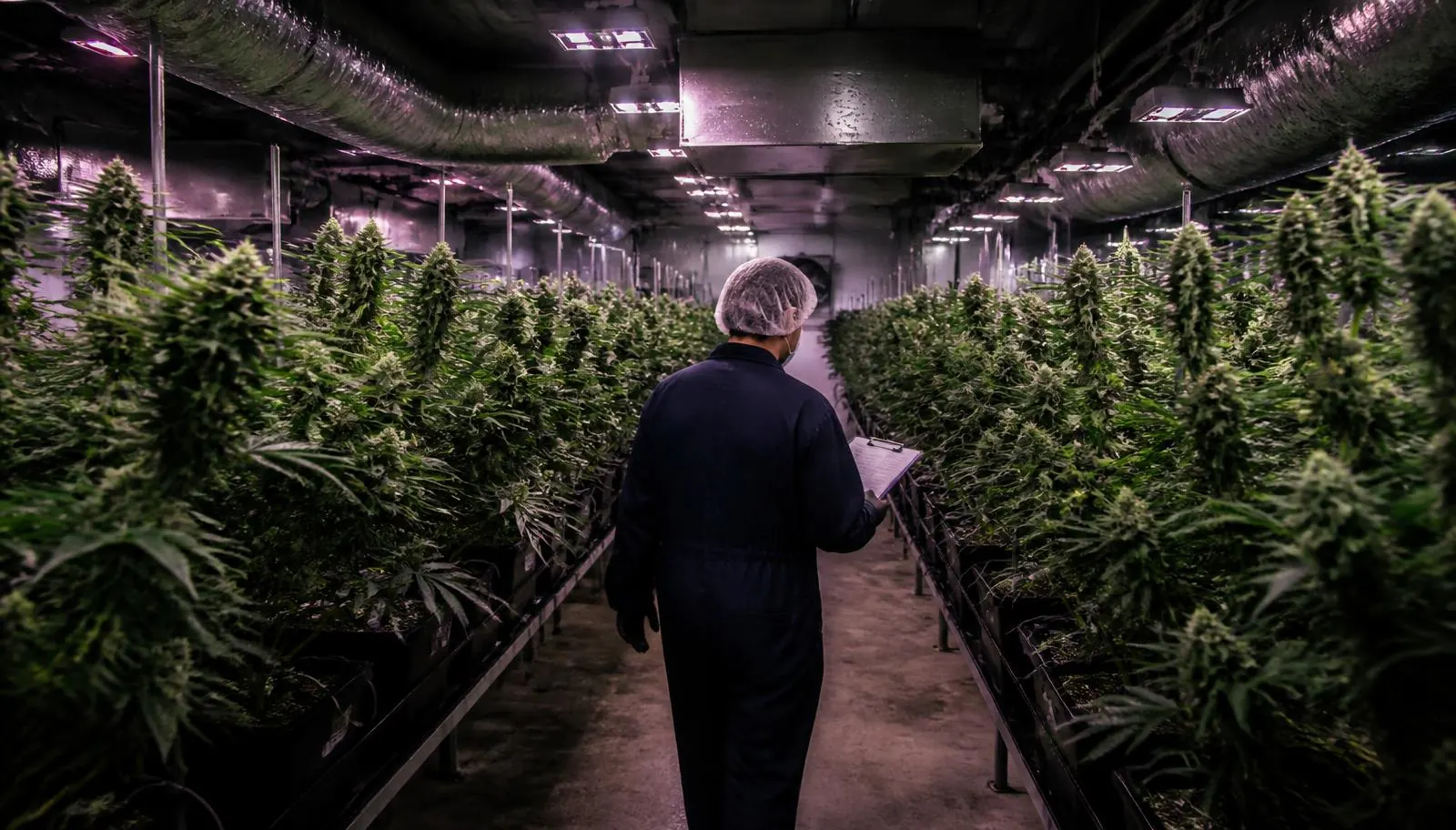
Cultivation Bookkeeping in Oregon
Producers carry cost long before they carry revenue, which makes recordkeeping discipline a cash-visibility issue as much as an accounting one.
Producer bookkeeping is dominated by vendor bills and labor. Growing inputs, nutrients, media, packaging and supplies arrive continuously and have to be coded consistently. Facility expenses — rent, power, water, climate control, security — are significant and recurring. Labor is recorded with enough coding detail to be analyzed later. Equipment purchases are capitalized and depreciated rather than expensed on impulse.
Inventory-related activity is recorded as it occurs, including transfers and adjustments, so that costing and valuation work has complete underlying data. Cash and debt are tracked closely, because production cycles create real gaps between spending and collection.
We handle the financial recordkeeping and reporting; cultivation operations are yours. See cultivators and producers for the full accounting scope.
Processing
Processor & Manufacturer Bookkeeping
Conversion activity makes the relationship between purchases, production and finished goods the central bookkeeping question.
Processor bookkeeping records raw material and packaging purchases, production labor, equipment additions, facility costs and the inventory movement that connects inputs to finished goods. Vendor bills are coded by whether they represent inventory inputs or operating costs. Accounts payable and cash are reconciled on the same monthly rhythm as everywhere else.
Because conversion changes both quantity and cost basis, complete recording of production activity is what later allows costing work to be supported rather than estimated. Bookkeeping captures the activity; the valuation and yield analysis is accounting work built on top of it. Manufacturing decisions themselves stay with your production team. See processors and manufacturers.

Scale
Cannabis Bookkeeping for Multi-Location Businesses
Multiple sites do not need multiple bookkeeping systems. They need one system applied identically.
The foundation is a single chart of accounts used by every location, with location coding applied to transactions rather than separate accounts created per site. That one decision determines whether comparative reporting is possible at all — accounts duplicated per location make consolidation a manual exercise forever.
From there, each site's bank and cash activity is reconciled separately, inventory is tracked by location, payroll is coded by site, and vendor bills are allocated to the location that incurred them. Shared expenses — insurance, corporate salaries, software, professional fees — are allocated on a documented, consistently applied basis so location results are comparable and the allocation can be explained.
The output is a profit and loss statement per location plus a consolidated view. Ownership sees which sites perform, where labor or margin is drifting and where attention is worth spending. Groups operating across several license types often need more than location reporting — see multi-license operators.
- Location A + B + C
- Standardized bookkeeping
- Location reporting
- Consolidated view
Structure
Cannabis Bookkeeping for Multi-Entity Businesses
Separate legal entities require separate books. Not separate classes inside one file.
Each entity maintains its own general ledger, its own bank accounts and its own transaction record. Inventory belongs to the entity that owns it. Expenses belong to the entity that incurred them. Cash transfers between entities are recorded on both sides as what they actually are — intercompany balances, loans or capital activity — rather than disappearing as unexplained movement.
Mixed entity records are among the hardest problems to unwind, because reconstruction requires deciding retroactively which entity a transaction belonged to, often without contemporaneous documentation. Keeping the books separate from the start costs far less than separating them later.
We handle the accounting. Entity structuring itself is a legal question for your attorney; we work with the structure you have and record it accurately.
- Entity A + Entity B
- Separate books
- Intercompany reconciliation
Intercompany
Intercompany Bookkeeping
Every intercompany balance has two sides, and both of them should agree.
Due to and due from accounts capture what one entity owes another. Cash transfers, shared costs paid by one entity on another's behalf, legitimate intercompany charges, inventory transfers where applicable, loans and capital activity all run through them. Each transaction should be recorded in both sets of books in the same period and for the same amount.
Reconciliation is simple in principle: entity A's receivable should equal entity B's payable. When it does not, the difference is usually a one-sided entry, a timing difference at period end, or a transfer recorded as an expense in one entity and nothing in the other. Reviewing these monthly keeps them small and explainable.
- Entity A receivable
- Reconciliation
- Entity B payable
Cleanup
Cannabis Bookkeeping Cleanup
A large share of the businesses that call us are not looking for ongoing bookkeeping yet. They need the existing books repaired first.
The symptoms are consistent: books months or years behind, bank accounts never reconciled, a cash balance that no longer resembles reality, inventory balances that were never tied to a count, ancient accounts payable that no longer represents obligations, payroll liabilities that never clear, loan balances that do not match lender statements, duplicate transactions from double imports, uncleared suspense and undeposited-funds accounts, entities mixed together in one file, and journal entries with no supporting explanation.
Cleanup starts with diagnosis rather than data entry. We determine what is actually wrong, which periods are affected, what source records still exist and what can realistically be reconstructed. That assessment drives the scope, because the work required varies enormously depending on whether source documents survive.
From there it is methodical: reconstruct missing activity from available sources, reconcile accounts period by period, record correcting entries that are documented rather than plugged, and close each period properly so the next one starts from a known balance. The output is books that can be filed from, financed against and maintained going forward.
- Books months or years behind
- Bank accounts unreconciled
- Cash balance unsupported
- Inventory never tied to counts
- Stale accounts payable
- Payroll liabilities that never clear
- Debt balances that disagree with lenders
- Duplicate transactions
- Uncleared suspense accounts
- Entities mixed in one file
- Undocumented journal entries
- No reliable monthly statements
- Diagnose
- Reconstruct
- Reconcile
- Supported correcting entries
- Close
Catch-up
Catch-Up Bookkeeping for Cannabis Businesses
Related to cleanup, but a different problem.
Catch-up work applies when the books are broadly correct but incomplete — periods were never recorded, usually because the business outgrew whoever was handling it. Cleanup applies when what exists is wrong and has to be corrected. Many engagements involve both, and knowing which is which determines the sequence of the work.
Catch-up runs period by period rather than all at once: record the missing activity, reconcile the accounts, close the period, then move forward. Doing it chronologically matters, because each period's ending balances become the next period's starting point.
We do not guarantee timelines before seeing the records. How long catch-up takes depends on how many periods are missing, how complete the source documents are and how many systems have to be pulled together. We scope it after reviewing what exists.
- Missing periods
- Transaction recording
- Reconciliation
- Month-end close
- Current books
Statements
Cannabis Financial Statements
What the close produces, and what each statement is actually for.
Income statement
Revenue, cost of goods sold, gross profit and operating expenses for the period. It shows whether the business produced a profit and where margin came from or went.
Balance sheet
Cash, inventory, receivables, accounts payable, payroll and tax liabilities, debt and equity at a point in time. It shows what the business owns, owes and has accumulated.
Cash flow information
How cash actually moved — from operations, from investing in equipment and facilities, and from financing activity such as loans and owner contributions.
Read together, the three answer different questions, and inventory-heavy cannabis businesses need all three. A profitable month can consume cash if inventory was built, debt was repaid or equipment was purchased. A month with weak profit can generate cash if inventory was drawn down. Neither situation is visible from a profit and loss statement alone.
That is why we review the balance sheet with the same seriousness as the income statement, and why cash gets its own view. More on presentation and management reporting on the financial reporting page, and on forward-looking cash work on cash flow planning.
- Profit≠Cash
Reporting
Cannabis Bookkeeping & Financial Reporting
Reporting quality is capped by the quality of the underlying books.
Dashboards, margin analysis, location comparisons and management reporting are all derived from the ledger. If revenue was posted net, margin analysis is wrong. If inventory was never reconciled, cost of goods sold is unreliable and so is every gross margin figure built on it. If payroll was recorded as a lump payment, labor analysis is impossible. No reporting layer fixes any of that.
This is why we treat bookkeeping as the foundation of the engagement rather than a commodity task at the bottom of the price list. Get the recording and reconciliation right, and the reporting layer becomes straightforward. See financial reporting for what that layer looks like.
- Bookkeeping
- Reconciliation
- Month-end close
- Financial statements
- Management reporting
Tax context
Cannabis Bookkeeping & Section 280E
Where Section 280E applies, recordkeeping quality carries more weight. It does not, by itself, determine the tax outcome.
For cannabis businesses subject to Section 280E, the tax analysis depends heavily on facts that live in the accounting records: how transactions were recorded, what inventory detail exists, how costs were tracked and documented, and whether the resulting cost of goods sold figures can be traced to source records. Weak books limit the analysis regardless of how the return is prepared.
So bookkeeping's contribution is specific: a chart of accounts that separates activity meaningfully, complete and consistently coded transaction records, inventory records that are reconciled, documented cost accounting, and workpapers that a tax preparer can actually follow. That is preparation and documentation — not a tax position.
We are deliberate about this distinction. Bookkeeping classification does not automatically produce a federal tax treatment; that is a fact-specific analysis. We do not promise deductions or tax savings. The tax work itself is covered on 280E tax planning, and background reading is in the Oregon Cannabis Tax Guide.
- Bookkeeping classification≠Automatic federal tax treatment
- Supported COGS≠Arbitrary expense allocation
- Documented records≠Guaranteed outcomes
Planning
Cannabis Bookkeeping for Tax Planning
Planning requires knowing where the business currently stands. Current books are what make that possible.
Tax planning done in December on books that stopped in June is not planning. Current, reconciled records provide year-to-date financial information that projections can be built from, inventory and cost of goods sold workpapers that are supported rather than estimated, and enough visibility to model outcomes before the year closes.
That supports estimated tax planning where applicable, year-end decisions made while there is still time to act on them, and cash planning around obligations that are known in advance rather than discovered at filing.
- Year-to-date financial information
- Tax projections
- Estimated tax planning where applicable
- Inventory and COGS workpapers
- Year-end planning window
- Cash planning for obligations
Broader planning scope lives on cannabis tax planning.
Preparation
Cannabis Bookkeeping for Tax Preparation
Return preparation should start from reconciled balances, not from a year of uncategorized activity.
Year-end books that are ready for preparation have reconciled bank accounts and cash, an inventory balance supported by counts and a valuation schedule, cost of goods sold traceable to inventory records, payroll agreeing to filings, accounts payable reflecting real obligations, fixed assets with a current depreciation schedule, debt agreeing to lender statements, and tax liability accounts reconciled to what was remitted.
When those exist, workpapers assemble quickly and preparation is efficient. When they do not, the first phase of the engagement becomes cleanup at exactly the moment there is least time available.
Whether tax preparation is included in an engagement depends on scope and is confirmed in writing — bookkeeping and preparation are separate services and we do not assume one includes the other.
- Monthly bookkeeping
- Year-end close
- Tax workpapers
- Return preparation
Advisory
Cannabis Bookkeeping for Fractional CFO Support
Forecasting cannot outperform the data it is built on.
CFO-level work — budgeting, forecasting, scenario modeling, capital planning, lender and investor conversations — all runs on historical financial data. A forecast built on unreconciled books produces confident numbers that happen to be wrong, which is worse than no forecast at all.
This is why we usually stabilize bookkeeping before layering advisory work on top. Once the close is reliable, the same data supports forecasting, unit economics, cash runway and decisions about expansion or contraction. See fractional CFO and business advisory.
- Clean books
- Financial reporting
- Forecast
- Management decision
Diagnostics
Common Cannabis Bookkeeping Problems
What operators tell us, and what we look at first in each case.
| Symptom | What to investigate first |
|---|---|
| “Our bank doesn't reconcile.” | Duplicate imports, one-sided transfers, unrecorded fees and stale outstanding items carried forward. |
| “Our cash balance makes no sense.” | The chain from POS cash sales to counts to deposits, plus undocumented cash expenditures and unrecorded transfers. |
| “Our POS sales don't match deposits.” | Tender mix, refunds and discounts, deposit timing, and whether amounts collected for taxes were recorded as liabilities. |
| “Our inventory doesn't match the books.” | Receiving entries, transfers, adjustments recorded operationally but not financially, and when the last count was reconciled. |
| “Our COGS changes dramatically month to month.” | Whether inventory is being relieved consistently, cutoff on purchases, and whether costing is applied on a consistent method. |
| “Our payroll liabilities never clear.” | Whether payroll is being recorded as a lump payment instead of wages, employer costs, withholdings and remittances. |
| “We have old vendor balances.” | AP aging detail, duplicate bills, unapplied credits and payments recorded without matching to the bill. |
| “Our loan balance is wrong.” | Whether payments were split between principal and interest, and agreement to lender statements. |
| “Our entities are mixed together.” | Which entity owns each bank account, inventory and obligation, and whether intercompany balances exist at all. |
| “We only update our books at tax time.” | Everything above — annual recording almost always means unreconciled balance-sheet accounts. |
| “Our Metrc records don't tie to accounting.” | Transfers, conversions, waste and samples recorded operationally without corresponding financial entries. |
| “We can't produce reliable monthly statements.” | Whether a defined close process exists at all, and which reconciliations are being skipped. |
Practices
Cannabis Bookkeeping Best Practices
Ordinary accounting discipline, applied consistently. That is most of the advantage.
- Close every month on a defined schedule
- Reconcile bank, cash and cards in the period they occur
- Support every journal entry with documentation
- Keep one clear chart of accounts
- Maintain separate records for separate entities
- Code transactions by location and department
- Reconcile inventory to counts periodically
- Review the balance sheet account by account
- Investigate variances rather than plugging them
- Use consistent reporting periods
- Record vendor bills when incurred
- Keep source documents retrievable
These are accounting practices, not legal or regulatory advice. Licensing and regulatory obligations should be confirmed against current official guidance and with your counsel.
Roles
Bookkeeper vs Accountant vs CPA vs Fractional CFO
Four different functions. Most growing cannabis businesses eventually need all four, in this order.
| Role | Primary function | Typical output |
|---|---|---|
| Bookkeeper | Records and reconciles recurring financial activity | A current, reconciled ledger ready to close |
| Accountant | Closes the books and handles deeper financial accounting | Adjusted balances, inventory and COGS accounting, statements |
| CPA | Provides accounting and tax services within actual professional scope | Tax planning and preparation, technical accounting guidance |
| Fractional CFO | Uses financial data for forecasting, budgeting and decision support | Budgets, forecasts, scenario models, lender and management reporting |
Process
Our Cannabis Bookkeeping Process
A typical sequence. Engagements vary, and we scope to what a business actually needs rather than running everyone through an identical checklist.
- 01Understand the business, license types and entity structure.
- 02Review the current books and their condition.
- 03Review banking relationships and cash handling systems.
- 04Review point-of-sale and operational data sources.
- 05Review the inventory workflow end to end.
- 06Review and, where needed, restructure the chart of accounts.
- 07Record recurring financial activity on a defined cadence.
- 08Reconcile bank, cash and credit-card accounts.
- 09Maintain and review accounts payable and payroll entries.
- 10Record and review inventory-related accounting.
- 11Reconcile remaining balance-sheet accounts.
- 12Complete the month-end close.
- 13Produce and review financial statements with you.
- 14Coordinate accounting, tax and CFO support where engaged.
Coverage
Cannabis Bookkeeping Across Oregon
We work with cannabis businesses throughout the state, remotely and on a consistent monthly calendar.
Our bookkeeping clients run retail, production and processing operations across Oregon — in the Portland metro area and nearby communities including Beaverton, Hillsboro, Gresham, Tigard and Lake Oswego; throughout the Willamette Valley in Salem, Eugene, Corvallis, Springfield and Albany; in Bend and Central Oregon; and in Medford and Ashland to the south.
The work runs by video call and secure document exchange, so the monthly close calendar does not depend on geography. Where a facility walkthrough genuinely improves the costing and inventory work — most often for producers and processors — we arrange a site visit.
Reach us at (971) 509-9277 or advisory@cannabiscpaoregon.com, or schedule a consultation.

Related
Related Oregon Cannabis Accounting Services
Bookkeeping is one layer of the system. These pages cover the rest.
Services
Start from the Oregon cannabis CPA overview for the full picture.
Questions
Cannabis bookkeeping questions

Consultation
Get cannabis bookkeeping that closes every month
Bring your current books, your point-of-sale and banking setup and any periods that are behind. We will tell you what needs to be reconciled first and what an ongoing close would look like.